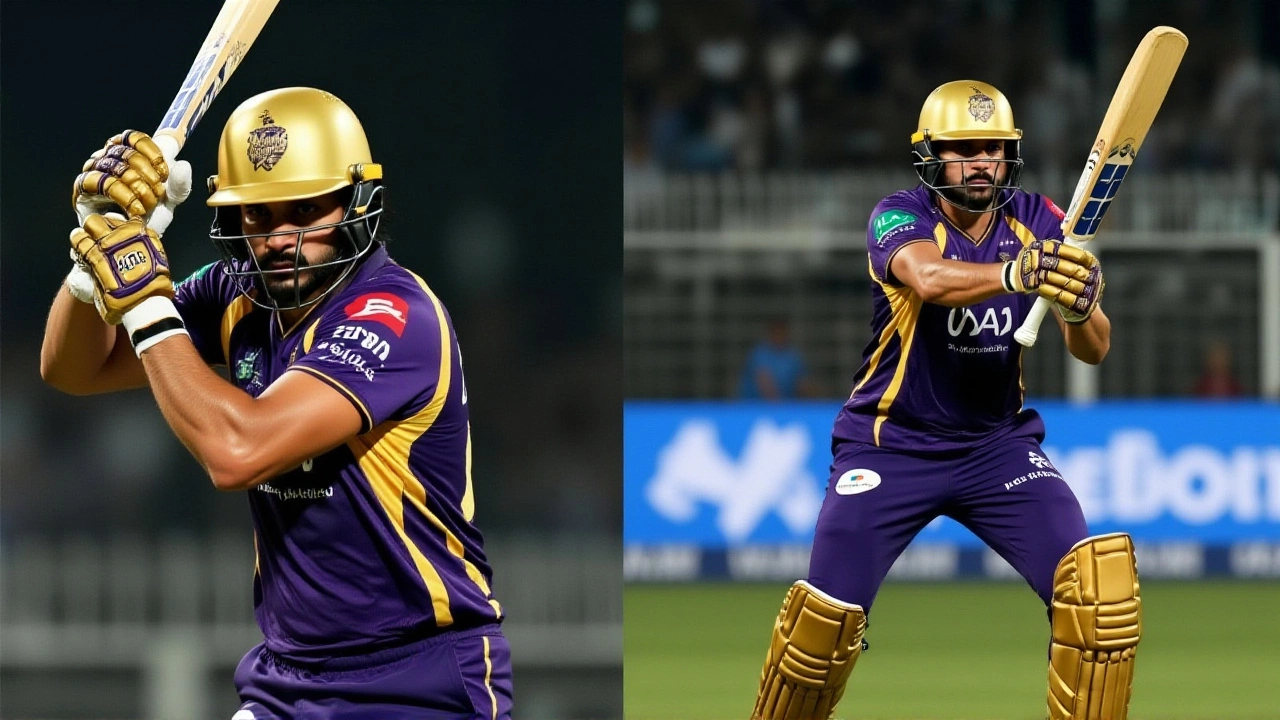
It wasn't a century. It wasn't even a half-century. But when Manish Pandey, batter for Kolkata Knight Riders, walked off the field at Eden Gardens after scoring just 25 runs, he carried a heavier legacy than most match-winners ever will. He had finally crossed the 4,000-run mark in the Indian Premier League 2026Kolkata.
The twist? He’s the third slowest player in history to get there.
In a league obsessed with strike rates and explosive finishes, Pandey’s journey is an anomaly. While others sprinted past milestones in record time, this 36-year-old veteran took his time—literally. It took him 164 innings to accumulate those 4,000 runs, making him the second-slowest batter to reach the landmark behind only Dinesh Karthik. His achievement against Delhi Capitals wasn’t about flash; it was about sheer, unadulterated survival.
The Math Behind the Milestone
Let’s break down what makes this stat so peculiar. In T20 cricket, consistency is usually measured by how quickly you can score. Pandey flipped that script. According to reports from Navbharat Times, he needed 188 innings to hit 4,000 runs? No, that’s Karthik. Pandey needed 164. That puts him firmly in the "slow but steady" category.
Here is how the top three slowest players compare:
- Dinesh Karthik: 188 innings (The undisputed king of longevity)
- Ambati Rayudu: 169 innings
- Manish Pandey: 164 innings
To put that in perspective, legends like MS Dhoni reached the same milestone in just 157 innings. Even aggressive hitters like Robin Uthappa (153 innings) and Sanju Samson (152 innings) got there faster. Pandey’s average of roughly 30 runs per dismissal tells a story of a player who rarely stays long at the crease but refuses to disappear entirely.
A Career Defined by Resilience
Pandey has been part of every single IPL season since his debut in 2008. Think about that. Nearly two decades in a format that changes rules, teams, and tactics almost yearly. Most players burn out or get replaced by hungry young talent within five years. Not Pandey.
His career stats are a testament to grit rather than glamour. Across 180 matches, he has scored 4,012 runs. Yes, he has one century and 22 half-centuries. But the real story is the hundreds of dots balls he survived, the quick singles he took, and the ability to rotate strike when the pressure was on. He became the 21st batter in IPL history to cross 4,000 runs, joining an elite club that includes Virat Kohli, Rohit Sharma, and Chris Gayle—but his path was distinctly different.
During the match against Delhi Capitals, KKR won the toss and chose to bowl first. Pandey came in during a tense chase. He faced 16 balls, hitting two fours and two sixes. The milestone run came off his 13th ball of the innings. He didn’t lose his wicket immediately; he added a few more runs before departing. It was a quiet moment in a loud stadium, easily missed by casual viewers but deeply significant for statisticians and fans who have tracked his journey since the early days of the league.
Why This Matters Now
In 2026, the IPL is faster, harder, and more athletic than ever. Batters are expected to clear the boundary on sight. Pandey’s presence challenges that narrative. He proves that there is still value in a player who understands game situations, manages risk, and contributes consistently over a long period.
For Kolkata Knight Riders, having a veteran like Pandey provides stability. Younger players learn from his temperament. When the big guns fail, someone needs to anchor the innings—even if that anchoring looks like a modest 25 off 16 balls. His experience in handling high-pressure chases, honed over nearly 20 years, is intangible but invaluable.
Critics might argue that his low strike rate is a liability. And they aren’t wrong. In a tournament where every run counts, efficiency is key. But Pandey’s longevity suggests that his team-mates and coaches see something else: reliability. He doesn’t take unnecessary risks. He knows when to play and when to leave the ball alone. In a league defined by chaos, that calmness is rare.
What’s Next for Pandey?
At 36, Pandey isn’t going anywhere soon. With no immediate retirement plans announced, he could well be aiming for higher milestones. 5,000 runs? Possibly. Given his current trajectory, it might take another 50+ innings, pushing him further into the "slowest" territory. But that’s okay. He’s not playing for records anymore; he’s playing because he loves the game.
As the IPL continues to evolve, Pandey remains a constant. A reminder that success isn’t always about being the fastest or the strongest. Sometimes, it’s just about showing up, inning after inning, year after year, until the numbers add up.
Frequently Asked Questions
Who is the slowest player to reach 4,000 runs in the IPL?
Dinesh Karthik holds the record for the slowest ascent to 4,000 IPL runs, requiring 188 innings to achieve the milestone. Manish Pandey is currently the third slowest, needing 164 innings, while Ambati Rayudu sits in second place with 169 innings.
How many matches has Manish Pandey played in the IPL?
Manish Pandey has played 180 matches in the Indian Premier League since his debut in 2008. Out of these, he has batted in 164 innings, accumulating a total of 4,012 runs with an average of approximately 30.
When did Manish Pandey complete his 4,000th run?
Pandey reached the 4,000-run milestone during the 70th match of the IPL 2026 season. The match was played between Kolkata Knight Riders and Delhi Capitals at Eden Gardens in Kolkata. He achieved the feat while scoring 25 runs off 16 balls.
How does Manish Pandey's strike rate compare to other top scorers?
While specific strike rate figures vary by season, Pandey’s need for 164 innings to reach 4,000 runs indicates a lower strike rate compared to aggressive hitters like MS Dhoni (157 innings) or Sanju Samson (152 innings). His style focuses on longevity and consistency rather than rapid scoring.
Has Manish Pandey scored any centuries in the IPL?
Yes, Manish Pandey has scored one century and 22 half-centuries in his IPL career. Despite being known for his consistent middle-order contributions, he has proven his ability to play big knocks when required.
Write a comment